



Canon 1D Mark III aangekondigd
donderdag 22 februari 2007, 07:56 door Elja Trum | 14.737x gelezen | 18 reactiesIn alle vroegte vanochtend heeft Canon haar nieuwste digitale spiegelreflex aangekondigd. De nieuwe Canon 1D mark III heeft een tien megapixel APS-H CMOS sensor (1.3x cropfactor) en kan 10 opname per seconden maken (en zo 110 opname in één ruk door maken). Deze snelheid maakt de 1D mark III dé camera voor sportfotografen. De camera beschikt verder over twee DIGIC III processor (de eerste DIGIC III gebruikt in een DSLR) heeft een nieuwe 19 punts auto-focus systeem en een sensor die een gevoeligheid van 6400 ISO aan kan.
Ook het scherm heeft een upgrade gekregen en is nu maar liefst 3,0 inch groot geworden. Daarnaast is er een 'live view' mogelijkheid beschikbaar. Hierbij wordt het mogelijk om het beeld achter op het scherm te bekijken zoals we al jaren gewend zijn van compactcamera's (al schijnen hier nog wel wat haken en ogen aan te zitten).
De verwachte verkoopprijs zal zo'n € 4.000,- zijn.
Over de lang verwachte Canon 40D helaas geen woord.
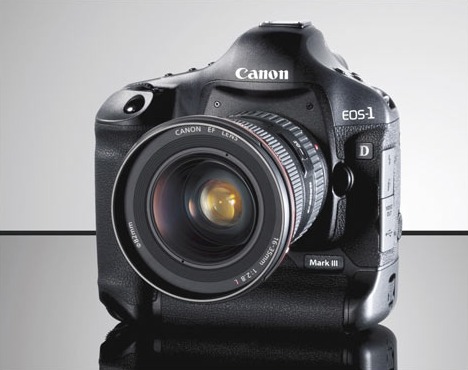
Canon 1D mark III
Wel zijn er nog een aantal extra producten bij de nieuwe camera aangekondigd.
Zo is er een vernieuwde versie van de EF 16-35 f/2.8L lens, een Speedlite 580 EX II flitser en een kleinere WIFI unit om je bestanden draadloos naar je computer te kunnen sturen. Ook is er een data beveiligingsset die de bestand kan versleutelen en daarbij kan vaststellen dat er niet met de foto geprutst is.
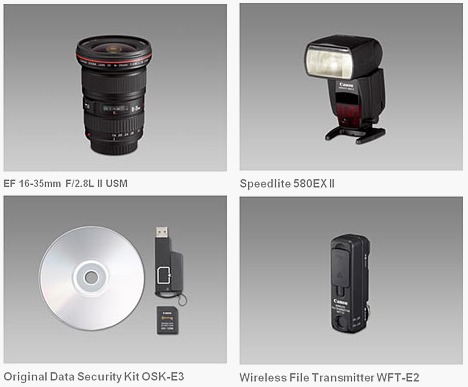
Canon accessoires; een nieuwe lens, flitser, data beveiliging set en WIFI unit
Video van Canon's 1D Mark III in actie
Meer info:
- Voorbeeld foto's
- Canon 1DS mark II PDF
- Topic op Dutch Photo Zone
- Canon Amerika
Bron: DPReview
Wil jij ook gave foto's maken?
Probeer twee weken gratis onze online cursussen over fotografie. Je krijgt direct toegang tot meer dan 100 cursussen. Na twee weken vervalt je proeflidmaatschap automatisch. Je zit dus nergens aan vast.14 dagen gratis fotografiecursussen kijken
Over de auteur
Elja Trum is oprichter van Photofacts en online fotografiecursussite Photofacts Academy. Hij schrijft sinds 2006 over fotografie. Elja is ook auteur van boeken over compositie, zwart-witfotografie, flitsfotografie en portretfotografie.
18 reacties
-
 gast schreef op donderdag 22 februari 2007 om 08:26 | reageer
Da's makkelijk... 3.999 dollar wordt 4.000 euro...
-

-
Brian (DSLR.nl) schreef op donderdag 22 februari 2007 om 14:36 | reageer
Zodadelijk de persmeeting van Canon, daarna zal er meer duidelijk zijn

-
Willy schreef op donderdag 22 februari 2007 om 21:31 | reageer
Oei, wat een mooi ding! Ik heb even de "white papers" gelezen, d'r zit nu wat kwijl op m'n toetsenbord.
 Canon zit duidelijk niet stil, ik word steeds benieuwder naar de komende "EOS 40D". Maar als je professioneel werkt met Canon, lijkt deze me een ideaal werkpaard.
 -
 Elja Trum
schreef op vrijdag 23 februari 2007 om 11:51
| reageer
Elja Trum
schreef op vrijdag 23 februari 2007 om 11:51
| reageer
Op Photography Blog staan nog een aantal foto's van de 1D Mark III inclusief accessoires.
Goed om te zien dat deze nieuwe WIfi module aan de zijkant van de camera kan hangen in plaats van dat deze aan de onderkant in de weg zit. -
Brian (DSLR.nl) schreef op vrijdag 23 februari 2007 om 13:21 | reageer
Ben ondertussen wel erg benieuwd of die 40D er wel echt aan zit te komen. In de persinformatie die gisteren naar buiten gekomen is wordt er met geen woord gerept over een ophandenzijnde nieuwe DSLR van Canon en voor de PMA hebben we ook geen afspraak voor een nieuwe persmeeting.
-
-
Bart Prins schreef op vrijdag 23 februari 2007 om 20:12 | reageer
Iemand een idee wanneer dat de Mark III dan ook echt in de winkels ligt ?
-
-
Bart Prins schreef op vrijdag 23 februari 2007 om 22:40 | reageer
Ah ok bedankt ik was al aan het wachten mijn 20d is inmiddels echt aan vervanging toe en ik heb het laatste jaar is flink kunnen sparen, dus deze wordt het!!! Wat een specs zeg. Ben blij om te zien dat Canon niet meegaat met die megapixel race maar ook aandacht geeft aan snelheid en AI punten dat geeft voor mij meteen de doorslag.
-
gast schreef op zaterdag 24 februari 2007 om 10:36 | reageer
4149 euro bij Kamera express. Hoe is dat prijsverschil tussen 3.999 dollar en 4.149 euro (bijna 1000 euro) te verklaren?
-
Bean schreef op zondag 25 februari 2007 om 13:44 | reageer
Prijs in euro's is inclusief BTW. Aangezien ze in Amerika per staat verschillende tarieven hebben, zijn die prijzen ex. tax.
-
Elja Trum
schreef op zondag 25 februari 2007 om 23:02
| reageer
De eerste previews van de Canon 1D mark III beginnen beschikbaar te komen. Imaging Resource heeft een uitgebreide preview, inclusief filmpjes van de nieuwe LiveView modus en een demonstratie van de snelheid van 10 frames / seconden..
-
-
 ebonsky
schreef op vrijdag 23 maart 2007 om 11:21
| reageer
ebonsky
schreef op vrijdag 23 maart 2007 om 11:21
| reageer
Lees dit maar eens:
Canon EOS-1D Mark III report
From Thursday, February 22 through Wednesday morning, February 28 I had the opportunity to work with the just- (and I mean just) announced Canon EOS 1D Mark III Professional Digital Camera Body.
Best advice: call Gary Farber at Hunt’s Photo and get on the list now; this will surely be the hardest-to-get-camera in the history of SLR photography. After one day in the field with this amazing camera I placed an order for two Mark IIIs through the Explorers of Light Program.
What’s the big deal?
10 frames per second. 10.1 megapixels (with apologies to the folks who were positive that a 22mp Canon body was just over the horizon. What Canon did was replace the EOS 1D MIIN rather than—as everyone had expected—replace the EOS 1Ds MII).
Images are processed at 14 bits for a total color depth of up to 16,384 tones per pixel, compared to 4,096 tones per pixel from 12 bit images. (This will result in smoother color gradations throughout the image file and should eliminate the circular banding effect when the sun is included in the frame.) 1.3X crop factor. The control of noise at the higher ISO settings is mind-boggling (See the two remarkable gator images above). The ISO settings range from 50-6400 (again, see the two images above). The Mark III, with the new high-capacity, lightweight, compact lithium-ion battery (thank you Nikon), much lighter than its predecessors. With a totally new AF system that features 19 cross-type sensors, autofocus is fast and responsive; you can almost feel the recoil as the image snaps in to focus. AI Servo AF is more accurate than with any camera body I have every used. The Dual Digic III processors allow for creating bursts of up to 30 RAW images; I never came close to filling the buffer.
The Mark III features something called the “EOS Integrated Cleaning System”. The bottom line on that: I processed more than 40 images created over a span of 6 days with the DPP software and did not encounter a single speck of sensor dust. Amazing. You can fine tune AF accuracy for each lens that you own. Amazing again! The tiny joy stick can be used to scroll through a magnified image and to toggle back and forth between the central sensor and AFPS.
You can (I did) choose to apply Noise Reduction in high ISO images. Most of the previous Personal Functions (which were a pain to add and work with) are now included with the Custom Functions (which have been divided into four categories to make things a bit simpler). And several valuable new Custom Functions have been added. Though I barely had time to learn and set up the custom functions, by the time I had to send the cameras (I had two) back, I had personalized the Mark IIIs so that each could do things quickly that I never thought possible.
The Mark III features Live View; you press the set button in the center of the thumb wheel and you see the live view (as framed in your lens) on the bright 3 inch LCD screen on the back of the camera. At first it seemed that this feature is pretty much a dud for photographing birds or wildlife in action, but because of some mis-communication and a missed e-mail, I did not realize that you can view a live histogram on the LCD when you are in Live View. Thus, if you have a relatively static situation you can view the histogram before making an image and add or subtract light as needed to ensure that you are exposing to the right and creating the highest possible quality image file. I can’t wait to get my very own Mark IIIs to give this feature a test drive. Jeez, I almost forgot to mention that Highlight Tone Priority can be set to increase the dynamic range when working with bright whites in bright sun.
Above are the basics that guarantee that this is the finest wildlife and sports camera ever. You can learn more about the seemingly zillion other features, improvements, and accessories here at robgalbraith.com.
And read Canon’s 63 page White Paper.
There is some amazing stuff on the camera on Canon Japan.
And, on an unrelated note, visiting the Canon Camera Museum and taking the lens tour will be an enlightening experience.
Camera operation, controls, and custom functions on this amazing new professional camera body are quite different in most instances from the previous generations of Canon Professional Digital Cameras (all of which were either quite similar or identical to their predecessors). The learning curve will be a bit steep for most folks.
My one major criticism of the Mark III is that when you are working outdoors (even on cloudy-dark days) it is virtually impossible to see the edge of the histogram box; this makes it difficult to accurately expose to the right. I let Canon know about this problem after evaluating each of the previous pro digital bodies but alas, they still have not gotten it right. I am hoping that this can be fixed with a firmware update; if not, my Mark III will sport a one-inch strip of yellow masking tape along the right edge of the histogram box. That said, I am chomping at the bit to get my hands on my Mark IIIs. -
ebonsky
schreef op vrijdag 23 maart 2007 om 11:27
| reageer
Ik vergeet te vertellen dat ik na het lezen van dit artikel, de camera gelijk besteld heb. De belangrijkste reden waren voor mij: Snelheid, scherpstelling en bijna geen ruis bij 6400 asa.
Ben ik gelijk van dat gemier af dat mensen bij het beoordelen van foto's mekkeren over de ruis.
Ik wacht met spanning af wanneer Cameranu.nl mijn camera afzend.... -
-
Elja Trum
schreef op dinsdag 24 april 2007 om 20:01
| reageer
Bij Rob Galbraith is een uitermate positieve preview van de Canon 1D mark III te lezen.
Deel jouw mening
Let op: Op een artikel ouder dan een week kan alleen gereageerd worden door aangemelde bezoekers.Wil je toch reageren, meld je dan aan of maak gratis een account.
Live Fotografie Workshops
Verbeter jouw fotografie in de praktijk met een workshop van Photofacts Academy

Masterclass Naaktfotografie
vrijdag 28 augustus 2026
Photofacts Studio, Elst (Gld)
nog 3 plaatsen

Portretfotografie in de Studio
woensdag 23 september 2026
Photofacts Studio, Elst (Gld)
nog 5 plaatsen

Flitsen op Locatie
donderdag 8 oktober 2026
Sint Agatha (Noord Brabant)
nog 8 plaatsen
Ook interessant
-
 Canon introduceert de EOS R6 V met een RF 20-50mm powerzoom
door Nando Harmsen
-
 Nieuwe groothoekobjectieven van Canon aangekondigd
door Elja Trum
-
 Review: Canon EOS R6 mark III
door Nando Harmsen
-
 Canon introduceert de EOS R6 mark III en de RF 45mm f/1.2 STM
door Nando Harmsen
-
 Review: Canon EOS R50 V vlogcamera
door Nando Harmsen
-
 Canon introduceert de EOS C50 en de RF 85mm f/1.4L VCM
door Nando Harmsen


Photofacts wordt mede mogelijk gemaakt door

Ontvang wekelijks fotografietips in je inbox
39.424 fotografie enthousiastelingen ontvangen de tips al!
Meer over de wekelijkse mail. Of blijf op de hoogte via  Facebook.

Elja Trum
